EEG Testing in Colleyville: Why You Might Need It
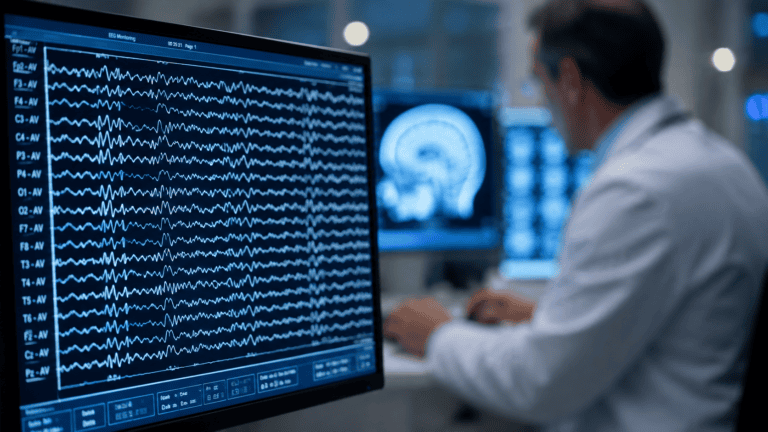
An EEG, or electroencephalogram, is a simple, non-invasive test that records the electrical activity in your brain. Small sensors are placed on your scalp to pick up brainwave patterns. These patterns can help your neurologist see if there is unusual activity that might be linked with seizures or other problems.
If you have been told you may need an EEG test in Colleyville, it can feel a little stressful at first. We want you to know what to expect so you can feel calmer and more prepared. At A&B Neurology in Colleyville, board-certified neurologist Dr. Babak Rezaei uses EEG testing to evaluate adults who are 16 and older with seizure concerns and other neurological conditions. Our practice does not provide services for children under 16, intellectual disabilities, autism, cerebral palsy, neuropathy, neuralgia, or pain disorders.
When doctors or patients talk about an EEG test, Colleyville residents often are thinking about seizure or epilepsy concerns. But EEG can also support care for other brain conditions in the right setting. Our goal is to explain how the test works, how you can get ready, and how the results may help guide your care.
What an EEG Is and When It Is Recommended
An EEG records the tiny electrical signals your brain makes all the time. During the test, a trained staff member places small metal discs called electrodes on your scalp using a special paste or gel. The electrodes do not hurt and they do not put electricity into your body. They simply pick up the brain’s activity and send it to a computer so your neurologist can review the patterns.
A Colleyville neurologist may recommend an EEG if you have:
- Possible seizures or epilepsy
- Unexplained fainting or loss of consciousness
- Sudden episodes of confusion or staring
- Spells that family members describe as “zoning out”
- Changes in thinking after a stroke or head injury
If your doctor recommends an EEG test Colleyville patients often ask what the test can show. EEG can help your neurologist see if your episodes are likely related to seizures or if they might have another cause. At A&B Neurology, EEG is one part of a broader evaluation for adults 16 and older with conditions such as seizures, epilepsy, migraines, stroke, Parkinson’s disease, multiple sclerosis, dementia, and traumatic brain injury. We do not use EEG to diagnose neuropathy, neuralgia, or pain disorders, and we do not see children under 16 or patients with intellectual disabilities, autism, or cerebral palsy.
Types of EEG Offered at A&B Neurology
There are different ways to record brain activity, and the right type of EEG depends on your symptoms and how often they occur.
1. In-office (routine) EEG
A routine EEG is done in our Colleyville office. It usually lasts between 20 and 40 minutes of recording time after the electrodes are placed. This test is often used for:
- First-time evaluation of possible seizures
- Follow-up for known epilepsy
- Episodes of loss of consciousness or suspected “blackouts”
During this test, you rest in a comfortable chair or exam bed while we record your brainwaves. Sometimes we may ask you to open and close your eyes, take deep breaths, or look at flashing lights, if it is safe for you, to see how your brain responds.
2. Ambulatory EEG
Some events are rare or mostly happen at night. In those cases, a short office test may not capture anything unusual. Ambulatory EEG allows longer-term monitoring at home, usually for 24 to 72 hours. The electrodes are placed at the office and connected to a small recording device that you take home. You go about your usual day with some simple limits, then return later so the recording can be reviewed.
Choosing where to have your EEG test Colleyville residents can benefit from the in-office and ambulatory options available at A&B Neurology. Our EEG services are only for adult patients age 16 and older. We do not perform EEG testing for pediatric patients or for primary evaluation of intellectual disabilities, autism, or cerebral palsy.
How to Prepare for Your EEG Appointment
Good preparation helps the test go smoothly and improves the quality of the results. Before your EEG test Colleyville neurologist Dr. Rezaei and his team will give you specific instructions so you can arrive prepared and relaxed.
General tips often include:
- Wash your hair the night before and keep it clean and dry
- Do not use hair spray, gels, oils, or heavy conditioners
- Follow any instructions about sleep, such as going to bed later or waking up earlier
- Bring a full list of medications, vitamins, and supplements
We may give you guidance about what you can eat or drink. Often, a light meal is fine, but large amounts of caffeine may be limited depending on your situation. Never stop or change your medication on your own. Only follow changes that your neurologist has clearly explained. Wearing loose, comfortable clothing can make it easier to place the electrodes and sit or lie still.
These preparation steps are for adult patients age 16 and older being seen at A&B Neurology. We are not a site for pediatric EEG, and we do not use EEG for neuropathy, neuralgia, or pain-only problems.
What to Expect During Your EEG Test in Colleyville
Knowing what will happen can help ease a lot of worry. Here is what a typical in-office EEG visit may look like:
- You check in and we confirm your medical history and medications
- A staff member measures your head and marks small spots on your scalp
- The scalp is cleaned in those spots and electrodes are gently placed with paste or gel
- You rest quietly in a comfortable position while the recording is done
During your EEG test Colleyville patients typically rest quietly while the equipment records brain activity in a calm, monitored setting. The test is painless. The electrodes sit on the surface of the skin, and no electricity is sent into your brain. You can talk with the technologist if you feel uncomfortable or need a short break.
For ambulatory EEG, the setup is similar, but you leave the office with the electrodes still in place and a small recorder worn on a belt or strap. You or a family member may be asked to keep a simple diary of any spells or symptoms while you are at home. Then you return so we can remove the electrodes and review the recording.
The environment at A&B Neurology is designed for adult patients with conditions such as epilepsy, migraines, stroke, Parkinson’s disease, multiple sclerosis, dementia, and traumatic brain injury. We do not perform evaluations for pain-only complaints, neuropathy, or neuralgia, and we do not provide care for children under 16, intellectual disabilities, autism, or cerebral palsy.
How EEG Results Help Guide Your Neurological Care
After the test, Dr. Rezaei reviews the EEG recording and looks for any abnormal brainwave patterns. Certain patterns can support the diagnosis of epilepsy or help separate seizure events from other kinds of spells, such as fainting or non-epileptic episodes. In people who have had a stroke or traumatic brain injury, EEG can help show ongoing irritation or abnormal firing in parts of the brain.
The information from your EEG test Colleyville neurologist Dr. Rezaei uses can be helpful in several ways:
- Confirming or ruling out a seizure diagnosis
- Helping decide if starting or adjusting anti-seizure medicine is reasonable
- Guiding decisions about further brain imaging such as MRI or other tests
- Tracking changes over time in some long-term conditions
EEG is just one part of your overall care. Your symptoms, medical history, physical and neurological exams, and sometimes other tests are all considered together. At A&B Neurology, we use EEG to support care for adults with seizures, epilepsy, migraines, stroke, Parkinson’s disease, multiple sclerosis, dementia, and traumatic brain injury. We do not use EEG as a primary tool for neuropathy, neuralgia, or chronic pain disorders, and we do not see children under 16 or patients with intellectual disabilities, autism, or cerebral palsy.
Choosing a local practice that focuses on adult neurological conditions can make the process feel more comfortable and clear. Our team’s goal is to explain each step, answer your questions, and use EEG results, when appropriate, to help guide thoughtful, personalized care.
Take The Next Step Toward Clarity In Your Neurologic Care
If you are considering an EEG test in Colleyville, our team at A&B Neurology is ready to guide you through every step with clear explanations and attentive care. We will review your symptoms, determine whether an EEG is appropriate, and explain what your results may mean for your treatment. To schedule an appointment or ask a question, please contact us so we can help you move forward with confidence.