After an unexplained collapse or blackout, wondering about seizure versus fainting is understandable. The answer usually depends on the full sequence of events, not one symptom. Jerking does not automatically mean a seizure, and an online checklist cannot reliably classify an episode. Medical evaluation may be needed.
The most useful information to share is what happened before, during, and afterward, separating what you remember from what someone else witnessed. First, make sure emergency care is not needed. If the person is still unresponsive, has breathing problems, or has other warning signs below, call 911 rather than waiting for an appointment.
Why fainting can look like a seizure
Syncope is the medical term for fainting: a temporary loss of consciousness caused by reduced blood flow to the brain. It can occur after prolonged standing, heat, dehydration, pain, or emotional distress. Some episodes involve brief jerking or stiffening, called convulsive syncope. These movements can resemble a seizure even though the underlying cause is different.
A seizure involves abnormal electrical activity in the brain and can affect awareness, movement, or sensations. Fainting often involves warning symptoms and relatively quick recovery, while some seizures are followed by longer confusion. However, these patterns overlap. Even loss of bladder control can occur with fainting. Clinicians interpret the combination of details rather than treating any single feature as proof.
When to get emergency help
According to CDC seizure first aid guidance, call 911 if:
- This appears to be the person’s first seizure.
- A seizure lasts longer than five minutes or another follows soon afterward.
- The person has trouble breathing or waking up afterward.
- The person is injured or the episode happens in water.
- The person is pregnant, or has diabetes and loses consciousness.
Do not wait five minutes when another emergency sign is already present.
After an apparent faint, emergency warning signs also include chest pain, a pounding or irregular heartbeat, failure to become alert within a couple of minutes, or new trouble speaking, seeing, or moving a limb. Call 911 for these symptoms. Fainting during exercise or while lying down also deserves urgent medical assessment because a heart-related cause is possible.
During a suspected seizure, stay nearby, clear hazards, cushion the head, and gently turn the person onto their side when possible. Time the episode. Do not restrain movements, put anything in the mouth, or offer food or water until the person is fully alert. If someone is unresponsive and not breathing normally after the movements stop, call 911 and follow the dispatcher’s CPR instructions.
Describe the episode in three stages
Write down details as soon as practical. The Epilepsy Foundation’s observation guidance emphasizes the beginning of an episode, changes during it, and recovery afterward. You do not need medical terminology.
Before: what the patient remembers
- Activity and position: Were you sleeping, exercising, sitting, lying down, standing for a long time, or getting up?
- Possible circumstances: Note heat, pain, emotional stress, illness, poor sleep, dehydration, or missed medication.
- Early symptoms: Describe dizziness, nausea, sweating, dimming vision, ringing ears, a racing heart, or an unusual smell or sensation.
- Memory: What is the last thing you remember before the episode and the first thing afterward?
Report circumstances without assuming they caused the event.
During: what a witness observed
- Responsiveness: Did the person answer when spoken to? Could they speak or follow a simple request?
- Sequence and movements: Did they slump or fall? Was there staring, stiffening, jerking, or repetitive movement? Which body parts were affected, and did movement begin before or after the collapse?
- Other changes: Note skin color, breathing, tongue injury, loss of bladder control, or other injuries.
- Timing: Estimate how long unresponsiveness and movements lasted separately. Say whether you used a clock or are estimating.
Concrete observations are more helpful than simply saying, “They had a seizure.”
After: how recovery unfolded
Record when the person could answer clearly, recognize their surroundings, and return to their usual state. Note confusion, repeated questions, sleepiness, headache, muscle soreness, or nausea. Distinguish waking up from fully recovering. New weakness or speech problems require emergency attention.
If safe and appropriate, a witness video may help the clinician. Helping the person and obtaining urgent assistance always take priority. Never delay care to record.
What to bring to the appointment
Keep the patient’s account and witness account separate. It is fine to write “unknown” when nobody saw part of the event. Bring:
- A dated description of the episode and any similar previous events.
- A witness’s written account, or the witness themselves if possible.
- Your medication list, including doses, over-the-counter products, supplements, recent changes, and missed doses.
- Relevant history, including seizures, fainting, heart conditions, diabetes, significant head injuries, or serious brain infections.
- Family history of epilepsy, unexplained blackouts, heart rhythm disorders, or sudden unexplained death.
- Emergency department records, previous test results, and any safely obtained video.
Be open about alcohol or other substance use. Do not change prescribed medication on your own; discuss concerns with your treating clinician.
How doctors choose the next steps
An unexplained blackout may need assessment by primary care, emergency clinicians, cardiology, or neurology, depending on the circumstances. The American Heart Association’s guidance on fainting recommends an initial history, examination, blood pressure and heart rate checks, and an electrocardiogram, or ECG, which records the heart’s electrical activity. Additional testing depends on the findings.
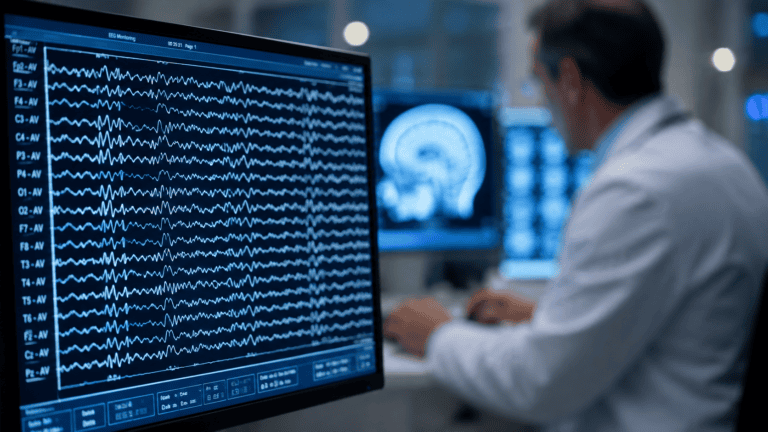
If the history raises concern for seizures, a clinician may recommend an electroencephalogram, or EEG, which records brain electrical activity, and sometimes other testing. A normal EEG does not rule out epilepsy. An EEG alone cannot settle the diagnosis; its results must be interpreted alongside the episode description, examination, and medical history. Not every fainting episode needs an EEG.
A&B Neurology provides evaluation and care for seizure concerns, with in-office EEG and ambulatory EEG available when clinically appropriate. Dr. Babak Rezaei is a board-certified neurologist.
This content is educational and does not replace personalized medical advice.
For a non-emergency evaluation of seizure concerns, contact A&B Neurology in Colleyville at (214) 717-2772. The practice sees patients ages 16 and older. If emergency warning signs are present, call 911 rather than waiting for an office appointment.