Why Understanding Your EEG Test Matters
An EEG test can feel a little mysterious if you have never had one before. You might be told you need it after a seizure, fainting spell, blackout, or new memory problem, and that can be scary. Understanding what an EEG test in Colleyville is and what it can show often makes the whole process less stressful.
An EEG, or electroencephalogram, helps your neurologist see how your brain is working. It can give answers about seizures, staring spells, confusion, or sleep issues. When we understand your brain activity more clearly, we can offer more targeted treatment, watch certain conditions more closely, and help you and your family feel more at ease.
For people in Colleyville and nearby communities, having EEG testing in a comfortable, outpatient setting close to home can make a hard time a little easier. Early summer often works well for many families, because school schedules are lighter and there is more flexibility to come in before life gets busy again in the fall.
What an EEG Test Shows About Your Brain
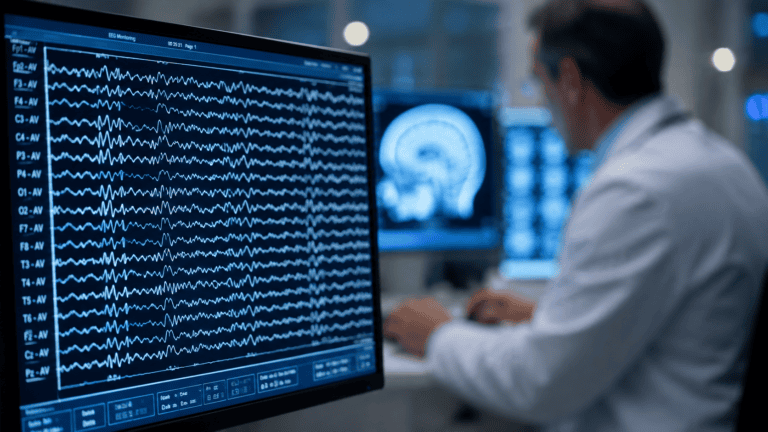
An EEG is a test that records your brain’s electrical activity. Your brain cells talk to each other using tiny electrical signals. During an EEG, small sensors called electrodes are gently placed on your scalp, and a computer records these signals as lines and patterns.
EEG testing can help your neurologist:
- Look for seizure activity and epilepsy
- Evaluate staring spells, blackouts, or sudden drops
- Check brain function after a head injury or stroke
- Study some sleep problems and nighttime events
- Look into memory changes, confusion, or some types of dizziness
It is important to know what an EEG cannot do. It cannot read your thoughts, tell your personality, or show your emotions. It also does not give pictures of the brain like an MRI or CT scan. Many times, EEG is used together with other tests, such as imaging studies or blood work, to build a fuller picture of what is going on.
There are two common types of EEG your neurologist may suggest:
- Routine EEG: A shorter test, usually done in the office, that lasts a limited amount of time.
- Ambulatory EEG: A longer test where you wear a small recorder for many hours, sometimes overnight, while you go about your usual day.
If your spells or symptoms happen often, a routine EEG might capture them. If they are rare or tend to happen at night, an ambulatory EEG gives more time to catch abnormal activity and can show what your brain is doing during normal daily life or sleep.
Types of EEG Tests in Colleyville and When They Are Used
In Colleyville, patients commonly receive two main EEG services: routine EEG in the office and ambulatory EEG that records your brain activity over a longer period of time. Both are noninvasive and are done in an outpatient setting.
A neurologist may recommend:
- Routine EEG when symptoms are frequent, brief, or recently started
- Ambulatory EEG when events happen at night, are rare, or did not show up on a routine test
- Follow-up EEG to check how treatment is working or if brain activity has changed
EEG results are just one part of a complete neurological evaluation. Your neurologist might also suggest other tests, such as:
- Transcranial Doppler ultrasound (TCD) to study blood flow in certain brain arteries
- Carotid duplex ultrasound to look at blood flow in the neck arteries that supply the brain
- Additional testing when there are concerns about migraines, dementia, or Parkinson’s disease
Having these studies available in the Colleyville area means less travel time, fewer separate trips, and a smoother path from testing to follow-up visits.
How to Prepare for Your EEG Appointment
A little planning before your EEG test in Colleyville can make the day go more smoothly. Your neurologist will give you specific instructions, but some general steps are common:
- Wash your hair the night before and avoid oils, gels, or sprays
- Follow any sleep instructions, such as staying up later or waking earlier if asked
- Ask before changing or skipping any regular medications
- Have a light meal so you are not too hungry or too full
On the day of your test, you will check in at the office and be brought to a quiet room. A technologist will measure your head and place sensors on your scalp using a special paste. You will lie or sit comfortably while the EEG records your brain activity. At times, you may be asked to:
- Take deep breaths for a few minutes
- Look at flashing lights with your eyes open and closed
- Relax with your eyes closed for certain parts of the test
An EEG is painless and does not put electricity into your brain. The sensors only record; they do not shock or stimulate. You may feel a little sticky from the paste, but this washes out of your hair later with shampoo.
For a June appointment in Texas, it often helps to wear comfortable, layered clothing. Exam rooms can feel cool because of the air conditioning, even when it is hot outside. Allow a little extra time in your schedule for traffic or road work in and around Colleyville so you do not feel rushed.
What Your EEG Results Can Tell You
After your test, a neurologist reviews the EEG recording in detail. They look at the patterns of your brain waves while you are awake, drowsy, or asleep during the test. They check for:
- Sharp waves or spike patterns that may suggest seizure activity
- Areas where the brain waves are slower than expected
- Changes that might point to past injury, stroke, or other dysfunction
If the EEG is abnormal, it may support a diagnosis such as epilepsy or show effects from a stroke or head injury. If the EEG is normal, that result can still be useful. It may help rule out certain problems or guide your neurologist to look for other causes of your symptoms.
EEG findings often help shape the next steps in your care. Your neurologist may:
- Start a new medication or adjust your current one
- Order more testing, such as imaging or vascular studies
- Use repeat EEGs over time to see how treatment is working
At A&B Neurology in Colleyville, EEG results are reviewed by a board-certified neurologist, Dr. Babak Rezaei. We focus on explaining findings in everyday language so you and your family understand what was seen and what it means for your health.
Taking the Next Step for an EEG Test in Colleyville
If you are dealing with seizures, strange spells, new headaches, memory changes, or issues after a stroke, it can feel overwhelming. An EEG test in Colleyville may be one piece of the puzzle that helps bring answers. Talking with your primary care doctor or a neurologist is the best way to know if EEG is right for your situation.
At A&B Neurology, we work with many major insurance plans, help with referrals when they are needed, and do our best to coordinate testing around school, work, and summer travel plans. Our goal is to make the process as simple and comfortable as possible while we look for the cause of your symptoms.
Understanding your brain health is an important step toward feeling better and regaining confidence in daily life. With EEG testing and comprehensive neurological care available locally in Colleyville, you do not have to face that step alone.
Take the Next Step Toward Clearer Answers
If you are experiencing concerning neurological symptoms, we are here to help you get clarity and direction. Schedule an EEG test in Colleyville with A&B Neurology so our team can evaluate your brain activity and work with you on an informed treatment plan. If you have questions or are ready to book an appointment, please contact us so we can guide you through the next steps.